Personal Use vs Commercial Use Fonts: What You Can and Can’t Do
You find the perfect font. It’s free. You download it, use it on a client’s logo, and six months later someone emails asking for a licence fee. It happens more than you’d think, and almost always because of one small line in the readme file: free for personal use.
This guide explains what that line means, in plain words. It’s general guidance from people who work with fonts every day, not legal advice. The licence file inside the font’s ZIP always has the final say, so read it.
What “personal use” means
Personal use means you don’t make money from it, directly or indirectly, and it isn’t for a business. Examples that are usually fine:
- Your own wedding invitations
- A birthday poster for your kid’s party
- School projects
- Practising and learning design
- A greeting card you print at home for your mum
That’s about it. The list is shorter than most people hope.
What counts as commercial use
Commercial use is anything connected to money or a business. This is where people get caught out, because a lot of it doesn’t feel commercial:
- Client work. A logo, flyer or social post you make for someone else, even for a friend, even for free, is usually commercial because it’s for their business.
- Anything you sell. T-shirts, mugs, stickers, printables on Etsy, Cricut projects you sell at a craft fair.
- Your own business. Your shop sign, your menu, your Instagram posts promoting your services.
- Monetised content. YouTube thumbnails, videos and channel art on a channel that earns money. Many font makers treat this as commercial.
- Ads. Any advert, printed or online.
A good test: if the design helps someone earn money or promote something, treat it as commercial.
The different licence types you’ll see
Personal use only
Free for personal projects. For anything commercial, you need to buy a licence, usually from the designer’s shop or a marketplace. Many free fonts online are in this group.
Demo or trial
A cut-down version to test the font. Demo fonts often miss characters: no numbers, no punctuation, sometimes only capitals. Some even have a watermark in certain letters. They’re for trying, not for finished work. If a font suddenly shows a box or a strange symbol when you type a comma, you’re probably using a demo.
Free for commercial use
You can use it for client work and products. You usually still can’t sell the font file itself or pass it around as your own.
Open source (SIL Open Font License, or OFL)
The most relaxed common licence. You can use OFL fonts for almost anything, including commercial work, logos and products. The main rule is you can’t sell the font on its own. Most Google Fonts use this licence.
Public domain
No rights reserved. Use it however you like.
Commercial licences come in different sizes too
When you do buy a font, check what the licence covers. Common types:
- Desktop licence: install it on your computer and use it in designs, print and images. This covers most graphic design work.
- Web licence: needed if the font is loaded live on a website with code.
- App licence: for fonts built into a mobile app or game.
- Extended or POD licence: some designers want this for print-on-demand or products made in large numbers.
Most freelancers only ever need the desktop licence. Read the small print for merch, though, because that’s where extras usually apply.
Common questions we get
Can I use a personal use font in a logo for my own small business?
No. Your own business is still a business. You need a commercial licence, and for a logo it’s worth getting one properly, because you’ll use that logo for years.
Can I use it in a YouTube thumbnail?
If the channel is monetised or promotes a business, most font makers see that as commercial. On a small hobby channel with no income, it’s a grey area. Some designers allow it, some don’t. When in doubt, pick a font that’s free for commercial use.
What if I only sell a few things?
Quantity doesn’t change it. Selling one mug is still selling.
I made the design before I knew. What now?
Buy the licence now. Most designers are happy when someone does the right thing, and fonts are usually cheap compared with the trouble of a claim.
How to stay safe, simply
- Read the readme. Every font ZIP should include a licence or readme file. It takes one minute.
- Keep a record. Save the licence and your receipt in the project folder.
- Filter before you fall in love. On our font pages you can switch to “Commercial use” to only see fonts cleared for business work.
- Buy from the designer when you can. Every font page on Artistic Orbit links to the designer, and where a full licence is available, we show a “Buy commercial licence” button.
Font designers spend weeks, sometimes months, on a single family. Paying for the ones you use commercially is what keeps new free fonts coming.
Fonts that are free for commercial use
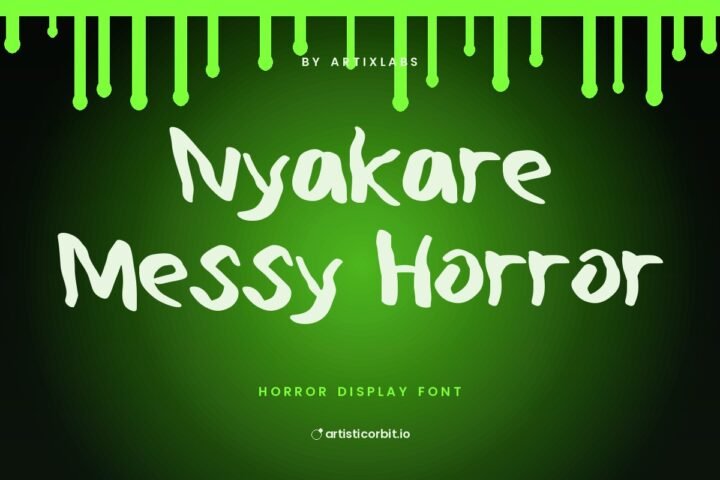
Nyakare Messy Horror
Commercial
Waloh Modern Playfull
Commercial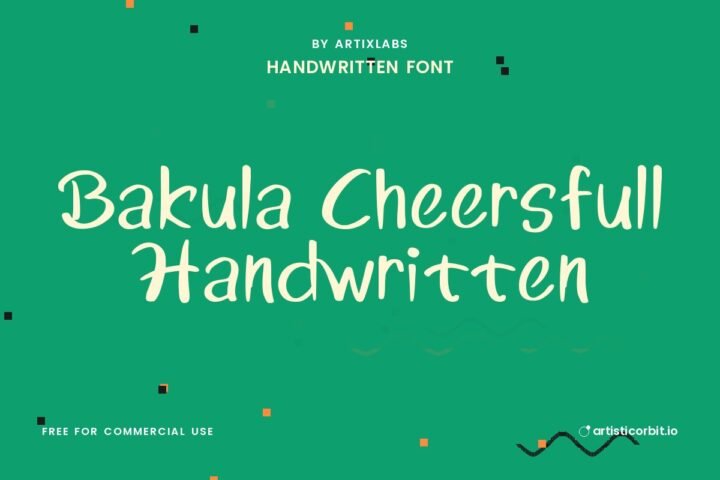
Bakula Cheersfull Handwritten
Commercial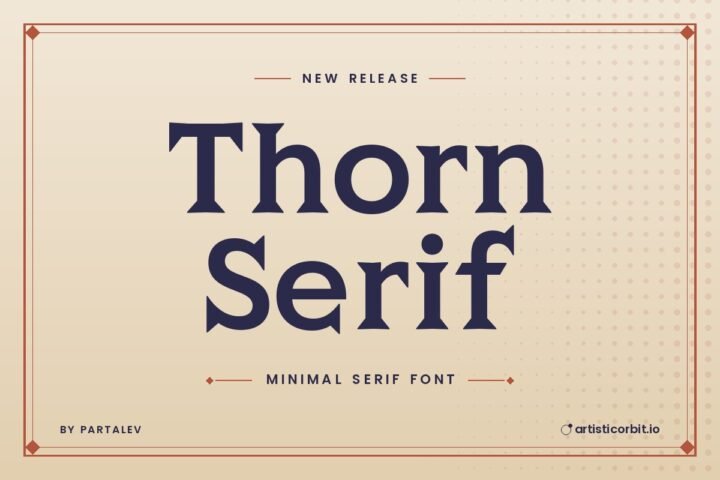
Thorn Serif
CommercialQuick answers
What does “free for personal use” mean for fonts?
You can use the font for projects that don’t earn money and aren’t for a business, like your own invitations or school work. Anything for a business, a client or a product you sell needs a commercial licence.
Are Google Fonts free for commercial use?
Most are, because they use the SIL Open Font License. You still can’t sell the font files themselves.
Is a demo font OK for a client project?
No. Demo fonts are for testing only and often miss characters. Buy the full version for real work.